
Breaking Down the Moves: Breaking at the Olympics

「Breaking」
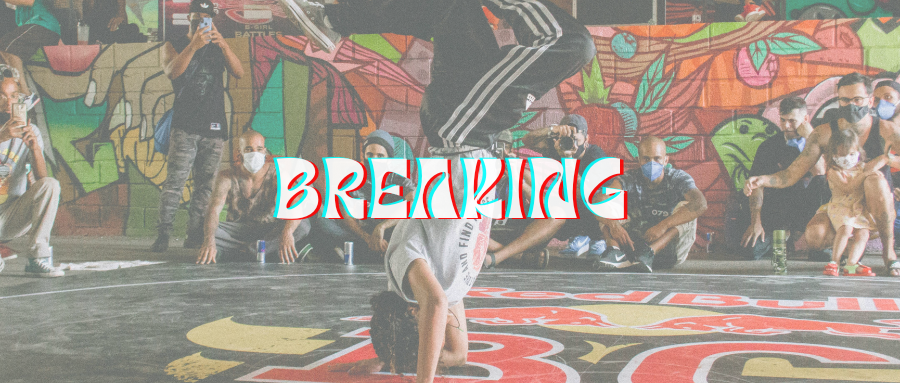
You may know breaking as one of the four pillars of hip-hop, defined by its dynamic, ground-based moves. But breaking is more than just a dance; it's a cultural expression with a rich history and global influence.
Five decades after emerging from the basement of the Bronx, breaking has made its way to the Olympic Games for the first time. In this article, you'll learn how breaking evolved from its street origins to a worldwide phenomenon and what makes this art form unique.
What Is Breaking?
Breaking, more commonly known as break dancing, is a popular dance genre under the umbrella of hip-hop.
Breaking was first introduced in the early 1970’s by Kool Herc, a Jamaican DJ. When Kool Herc was performing in dance clubs, he would yell “B-boys go down,” and that would be the cue for the b-boys (breaker-boys) to start breaking, and shortly after the b-girls (breaker-girls) would follow. Breaking was then popularized by the African American and Puerto Rican communities in the Bronx, New York City. In recent years, we have seen the popularity of breaking skyrocket with big names in the industry like Crazy Legs, Mr. Wiggle, and Storm.
What Does Breaking Look Like?

Breaking is a style of street dance that is extremely athletic, energetic, and uses lots of improvisation.
There are five fundamental elements that make breaking the way it is today.
1. Toprock
Toprock refers to moves and steps that are performed while standing. Toprock, typically used before Downrock, is used to warm up. Recently, Toprock moves have been trending because of its exposure on social media. Toprock moves can be found all over TikTok, Instagram, YouTube, and many more platforms. Some popular Toprock moves include the Cross Step, the Salsa Rock, and the Kick Side Step.
2. Downrock
Downrock, being the opposite of Toprock, are moves performed on the ground. Downrock is usually used after Toprock to mesmerize the audience. Some popular Downrock moves include Hooks, Foot Circles, Kickturns, and Six Steps.
3. Drop
Drops are used in between Toprocks and Downrocks. They are used as transitions and typically are sudden moves used on the ground. Most drops are classified as “flashy” moves. Some popular drops include the Knee Twist, Knee Drop, and Corkscrew.
4. Powermove
Power moves are acro-based moves focusing more on one's strength and momentum. These are usually used along with Freezes to attract the audience's attention. Some popular power moves include the Air Flair, the Flare, the Hurricane, and the Halo.

5. Freeze
Freezes are moves in which the dancer holds their position for a few seconds. Freezes require tremendous amounts of strength and balance to coordinate the move. Freezes typically occur at the very end of a song or during a strong beat. Some common freezes include the Shoulder Freeze, the Baby Freeze, and the Elbow freeze.

Breaking's Debut On Olympic

Olympic Breaking Competition Format
Dance battles are scored using five criteria: technique, vocabulary, execution, musicality, and originality. Each constitutes 20% of the total score. Judges judge each competitor relative to their opponent in each category rather than assigning raw individual scores.
Competitors do not know the music in advance. Each round lasts approximately one minute. When one breaker completes their round, their opponent immediately enters their set. Judges make their decisions promptly after the conclusion of the set amount of rounds (two in the round robin, three for the rest of the competition).
Competition Schedule
Breaking competitions begin on August 9th at 10:00 AM Eastern Time. Competitions take place at La Concorde Urban Park in the heart of Paris.

Writing | Tracy & Ivy
Edit | Ivy
Image | Internet
Link to Chinese Version: https://mp.weixin.qq.com/s/KrQlDoCUqLAJosXPQyoRxA
Reference:


Comments